
Mathematics is often regarded as the universal language of science and a foundational pillar of various fields, including engineering, economics, physics, and even social sciences. This study report aims to delve deeper into the evolution of mathematics, its significance in contemporary society, and https://masterypublications.com/ the various branches that constitute this vast discipline. By exploring its historical development, applications, and future prospects, we can appreciate the profound impact mathematics has on our world.
Historical Development of Mathematics
The roots of mathematics can be traced back to ancient civilizations. The earliest records of mathematical activity date back to the Sumerians around 3000 BC, who utilized a base-60 number system for trade and taxation. Similarly, the Egyptians developed a decimal system and made significant advancements in geometry, which aided in constructing their monumental pyramids.
The ancient Greeks significantly influenced the development of mathematics through the works of prominent figures such as Euclid, Pythagoras, and Archimedes. Euclid’s “Elements” is one of the most influential works in mathematics, laying the foundations of geometry and establishing rigorous proofs. Pythagoras contributed to number theory and the concept of mathematical relationships, while Archimedes made remarkable discoveries in calculus and geometry.
During the Middle Ages, Islamic scholars preserved and expanded upon Greek mathematical knowledge. They introduced the concept of zero and developed algebra, which later influenced European mathematics during the Renaissance. This period saw the emergence of notable mathematicians like Leonardo of Pisa, known as Fibonacci, who introduced the Fibonacci sequence to the Western world.
The 17th century marked a pivotal moment in mathematics with the advent of calculus, developed independently by Isaac Newton and Gottfried Wilhelm Leibniz. Their work laid the groundwork for modern mathematics, enabling the study of change and motion. The 18th and 19th centuries witnessed further advancements, including the formalization of mathematical concepts and the introduction of new fields such as statistics and probability.
The Importance of Mathematics in Contemporary Society
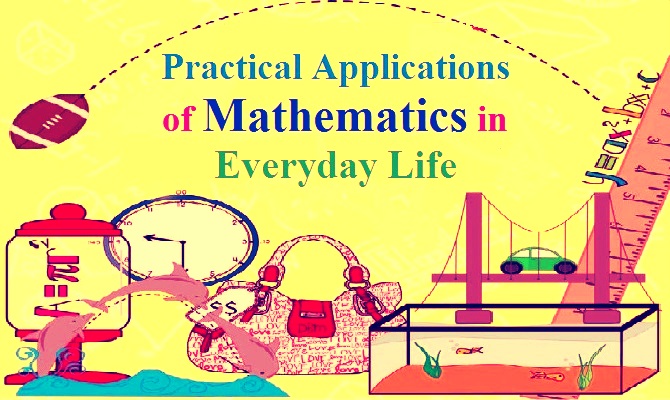
Mathematics is not merely an abstract discipline; it plays a crucial role in various aspects of everyday life and numerous professional fields. Its applications are ubiquitous, from simple calculations in daily transactions to complex algorithms that power modern technology.
1. Technology and Engineering
In the realm of technology and engineering, mathematics is indispensable. Engineers rely on mathematical principles to design structures, create algorithms, and solve complex problems. For instance, civil engineers use calculus and geometry to ensure the stability and safety of buildings and bridges. Similarly, electrical engineers apply mathematical concepts to design circuits and optimize communication systems.
The rise of computer science has further highlighted the significance of mathematics. Algorithms, which are foundational to computer programming, are rooted in mathematical logic. Data analysis, machine learning, and artificial intelligence rely heavily on statistical methods and mathematical modeling to make predictions and optimize performance.
2. Finance and Economics
In finance and economics, mathematics is essential for analyzing data, modeling economic behavior, and making informed decisions. Financial analysts use mathematical models to assess risk, evaluate investment opportunities, and forecast market trends. Concepts such as compound interest, present value, and financial derivatives are grounded in mathematical principles.
Economists employ mathematical models to study economic systems, analyze consumer behavior, and develop policies. Game theory, a branch of mathematics, is particularly influential in understanding strategic interactions among individuals and organizations.
3. Healthcare and Medicine
The field of healthcare has also been transformed by mathematics. Biostatistics plays a crucial role in clinical trials, helping researchers analyze data to determine the efficacy of new treatments. Mathematical modeling is used to understand the spread of diseases, optimize resource allocation, and improve patient outcomes.
Moreover, advancements in medical imaging technologies, such as MRI and CT scans, rely on complex mathematical algorithms to reconstruct images from raw data, enabling accurate diagnoses and treatments.
4. Environmental Science
Mathematics is vital in addressing environmental challenges. Mathematical modeling is employed to study climate change, predict weather patterns, and analyze ecological systems. These models help scientists understand complex interactions within the environment and develop strategies for sustainability.
For instance, differential equations are used to model population dynamics, while statistical methods are employed to analyze environmental data and assess the impact of human activities on ecosystems.
Branches of Mathematics
Mathematics is a vast field composed of various branches, each with its unique focus and applications. Some of the major branches include:
1. Arithmetic
Arithmetic is the study of numbers and basic operations, including addition, subtraction, multiplication, and division. It forms the foundation of mathematics and is essential for everyday calculations.
2. Algebra
Algebra involves the study of symbols and the rules for manipulating these symbols. It encompasses solving equations and understanding functions, making it a crucial tool for higher-level mathematics and various applications in science and engineering.
3. Geometry
Geometry is the study of shapes, sizes, and the properties of space. It has practical applications in fields such as architecture, engineering, and computer graphics.
4. Calculus
Calculus focuses on the concepts of change and motion. It is divided into differential calculus, which deals with rates of change, and integral calculus, which deals with the accumulation of quantities. Calculus is fundamental in physics, engineering, and economics.
5. Statistics and Probability
Statistics involves the collection, analysis, interpretation, and presentation of data. Probability theory deals with the likelihood of events occurring. Both branches are crucial for making informed decisions in various fields, including finance, healthcare, and social sciences.
6. Discrete Mathematics
Discrete mathematics studies mathematical structures that are fundamentally discrete rather than continuous. It includes topics such as graph theory, combinatorics, and number theory, playing a significant role in computer science and information technology.
The Future of Mathematics
As we advance into the 21st century, the importance of mathematics continues to grow. The rise of big data, artificial intelligence, and machine learning has created a demand for mathematicians and data scientists who can analyze complex datasets and develop algorithms to extract meaningful insights.
Furthermore, the integration of mathematics with other disciplines, such as biology, social sciences, and economics, is leading to interdisciplinary research and innovative solutions to global challenges. For instance, mathematical modeling is being used to study the spread of infectious diseases, optimize transportation systems, and address climate change.
In education, there is a growing emphasis on promoting mathematical literacy and critical thinking skills. Initiatives aimed at enhancing STEM (Science, Technology, Engineering, and Mathematics) education are essential for preparing future generations to tackle complex problems and drive innovation.
Conclusion
Mathematics is a dynamic and evolving discipline that has shaped human civilization and continues to influence various aspects of our lives. From its historical roots to its contemporary applications, mathematics serves as a critical tool for understanding the world around us. Its significance in technology, finance, healthcare, and environmental science underscores its role in addressing some of the most pressing challenges of our time.
As we look to the future, the integration of mathematics with other fields and the emphasis on mathematical education will be vital in fostering innovation and solving complex problems. Embracing the power of mathematics will not only enhance our understanding of the universe but also empower us to create a better world.
Deixe um comentário